
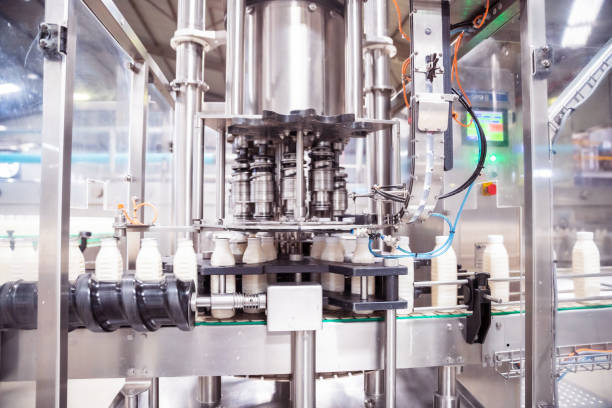
In my years working in packaging industries, I’ve learned how an Automatic Capping Machine transforms the way we handle bottles and containers with unmatched precision and efficiency. Whether sealing screw caps, aluminum caps, or ROPP caps, this machine ensures reliability across pharmaceutical, food, chemical, and beverage production lines. Its flexibility, speed, and ability to maintain hygienic standards make it essential for businesses seeking productivity and accuracy.
The modern VKPAK automatic rotary capping and sealing machine impressed me with its positioning plates, magnetic torque control, and adjustable design that fits various press-on, pilfer-proof, or snap-on caps. Working on medium or high capacity operations, these systems manage continuous production lines with ease. I’ve often recommended them to clients looking to improve consistency, performance, and torque precision without manual labor.
Efficient Rotary Automatic Capping Machine
A high-performing Automatic capping machine like the VKPAK rotary model provides smooth closure and consistent torque control through its modular design. It manages everything from 30 BPM to 80 BPM, handling trigger pumps, push-pull caps, and different bottle sizes. During my inspections, I noticed how adaptable layouts—whether clockwise or anticlockwise—help meet unique factory setups.
From cosmetic containers to industrial tanks, this machine handles every cap feeder and adjustment needed for speed or efficiency. The automated alignment and inspection modules enhance quality control, making it suitable for pharmaceutical, pesticide, and chemical lines. Its ability to integrate with existing packaging systems helps teams optimize their workflow without downtime.
Technical Specifications and Key Parameters
The VK-RC-1 and VK-RC-2 models operate between 1800–4800 b/h with a yield of 99%, thanks to precise capping heads and press heads. Their dimensions range from 2000×1000×1500mm to 2200×1000×1500mm, weighing 600–700kg with power ratings of 0.75KW and 1.5KW. Built from 304 Stainless Steel with CE certification, they are electric-driven, automatic grade, and backed by a 1-year warranty.
I appreciate how their voltage stability at 220V maintains uniform sealing across various applications—from beverage and food to medical and chemical industries. These technical specifications reflect precision engineering that supports long-term durability and production reliability.
Main Features That Make It Stand Out
The Automatic capping machine closes plastic, glass, and metal containers efficiently using press-on, screw, or pilfer-proof caps. With vibrating, rotary, or belt-type cap unscramblers, it supports seamless continuous feed through Pick and Place systems for accurate bottle neck positioning. The star wheel system ensures smooth torqueing and pressing, while the magnetic clutch guarantees consistent closure results.
From my technical experience, switching between plastic caps and aluminum caps is effortless using interchangeable heads. The machine design prioritizes low maintenance, precise torque values, and packaging consistency, which directly enhance performance reliability.
Why Automatic Capping Machines Matter
Every Automatic Capping Machine improves productivity, reduces human contact, and prevents contamination during packaging. Manual tightening causes repetitive strain and inconsistent sealing, but automation ensures uniform torque and sanitary results. Whether you handle small batches or large-scale manufacturing, automation helps achieve clean, fast, and reliable output.
In my own operations, adopting automatic cappers allowed us to focus more on innovation rather than repetitive work. These machines guarantee efficiency, safety, and compliance with industry hygiene standards.
Business Benefits of Automation
The Automatic capping machine boosts time efficiency, completing hundreds of bottles per hour with minimal supervision. It ensures leak-proof seals and reduces labor costs through smooth automation. Its scalability supports future upgrades for different containers, caps, and line speeds.
I’ve seen significant improvement in production safety and hygienic handling after implementing these systems. The reduction in human contact minimizes contamination risks, helping companies maintain efficiency and packaging accuracy.
Different Types of Capping Machines
Among the range, Chuck cappers apply caps while bottles remain in continuous motion, whereas spindle cappers spin stationary bottles at cap stations. Snap cappers attach snap-on caps with gentle pressure, while vertical wheel pluggers handle plugs instead of caps.
There are several Cap Sealing Machines available: Semi-Automatic Induction Cap Sealing Machine, Semi-Automatic ROPP Screw Cap Sealing Machine, Automatic Bottle Cap Sealing Machine, Automatic Rotary ROPP Screw Cap Sealing Machine, Automatic Vial Cap Sealing Machine, Automatic Measuring Cap Placing Machine, Automatic Induction Cap Sealing Machine, and Automatic Horizontal Flow Wrapping Machine. Each serves specific packaging types and production needs.
Industries Relying on Capping Systems
From beverage, food, and wine industries to pharmaceutical, medical, personal care, and beauty products, every sector benefits from automatic capping machines. They are equally valuable for cleaning products, paints, sealants, construction chemicals, and even candles or wax-based products.
My observation across home improvement and industrial packaging sectors proves that these systems increase product safety while maintaining consistent production output and brand reliability.
Cap Induction Sealing and Safety Features
A Cap Induction Sealing Machine adds an extra layer of leak protection, tamper evidence, and longer shelf life. Using electromagnetic induction, it bonds aluminum foil liners to bottle necks, creating airtight sealing. I’ve used models equipped with aluminum foil detectors, rejection systems, and automated height adjustment for multiple container sizes.
Their IGBT power modules, microprocessor panels, and visual alarm signals ensure high efficiency and short circuit protection. Meeting EN-60204-1 and EMC standards, these machines excel in food, beverage, cosmetic, chemical, and pharmaceutical sectors—a hallmark of advanced sealing systems.
Bottle Unscrambling and Line Integration
Automatic Bottle Unscramblers manage smooth bottle transferring from a bulk supply bowl to an inline conveyor. They reduce contamination, improve automation, and integrate perfectly with filling and packaging setups. Built from stainless steel with a compact footprint, they offer quick change-over, gentle handling, and photo-eye detection to prevent jams.
The system’s Omron PLC, touch screen control, and safety interlocks synchronize with the production line for smooth operation. As an engineer, I find these designs valuable for industrial automation and maintaining consistent production speed without operator fatigue.
Conclusion
In modern packaging automation, an Automatic capping machine stands as a bridge between efficiency, safety, and flexibility. With advanced rotary ROPP cappers, induction sealers, and bottle unscramblers, every process achieves seamless, contamination-free, and fast production.
My professional experience confirms that industries like food, beverage, pharmaceutical, and cosmetic gain the most from this technology. When implemented strategically, it ensures reliability, high output, and long-term manufacturing excellence across automation systems and industrial applications.