
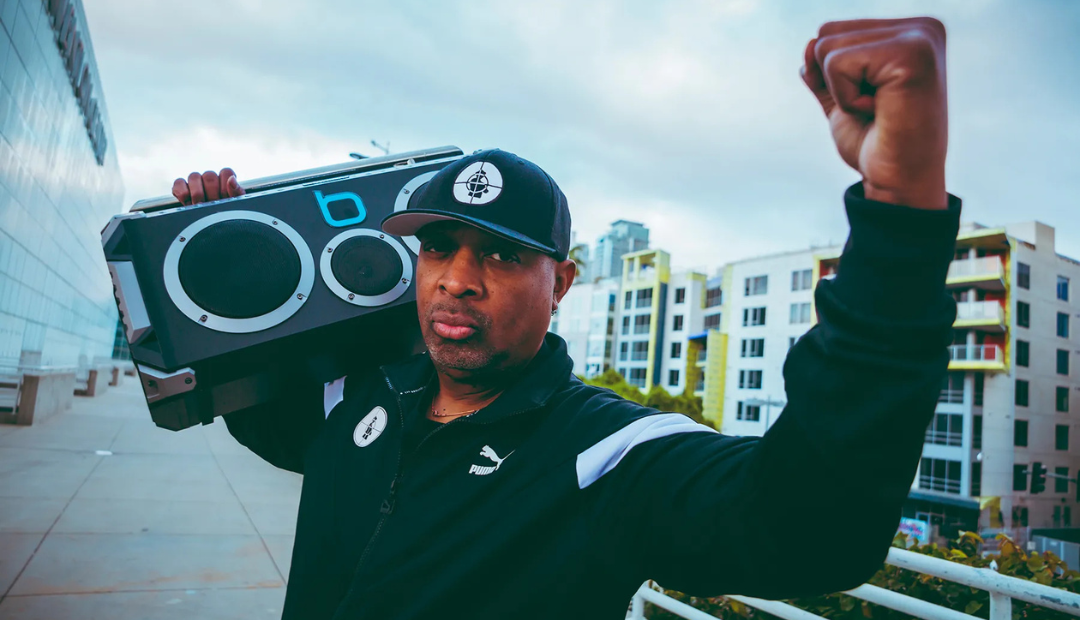
Chuck D, born Carlton Douglas Ridenhour in Roosevelt, Long Island, shaped Hip-Hop with Public Enemy, often praised by The Washington Post as a radical, politically charged band in America. He helped politicize rap by confronting racism, oppression, and social injustice, using his serious side to replace escapism with edutainment. I remember hearing Fight the Power and By the Time I Get to Arizona for the first time, and it felt like his cultural pride, political commentary, and sharp lyricism came alive.
His booming and authoritative voice delivered righteous lyrics, building bridges across racial lines, even as gangsta rap questioned their relevance. Back in my college days, I admired how he went from Adelphi University, where he studied graphic design and worked at Super Spectrum Mix Show, to leading open mics with confidence. It was inspiring to see a career rooted not just in artistry but also deep activism.
Later, when I saw his Rock and Roll Hall of Fame moment and remembered his collaboration with Anthrax, I understood why he is often called an articulate spokesman. That recognition didn’t just honor music, it honored a journey of standing tall in a space where few voices dared to go.
Chuck D Early Life and Education
Born in 1960 in Long Island, Chuck D New York, to politically active parents, he grew up hearing civil rights history at home. His mother enrolled him in Black Panther summer programs that taught Black history, cultural pride, and community empowerment. His role models included his father, Muhammad Ali, Hank Aaron, and Willie Mays, great sports legends who inspired him to speak boldly.
He turned down a scholarship in architecture to study graphic design at Adelphi University. Though suspended once, he returned under Harold Davies’ conditions, later completing his B.F.A. in six years. I once saw his Tales of the Skind cartoons, and they showed his gift for blending art with stories of identity.
At Adelphi, he co-hosted WBAU, worked on the Super Spectrum Mix Hour, and joined Spectrum City DJ crew. Inspired by Dick Gregory’s mix of comedy and activism, he embraced edutainment. Courses by Professor Andrei Strobert on African music roots, alongside influence from Gil Scott-Heron and The Last Poets, gave him the foundation of his message.
Formation of Public Enemy
The early demo Public Enemy No. 1, made with Hank Shocklee, caught Rick Rubin’s ear and led to Def Jam signing. He gathered Flavor Flav, Professor Griff as Minister of Information, DJ Terminator X, and Bill Stephney to form a group that would change music forever.
The iconic P.E. logo he designed—a figure in crosshairs—signaled defiance. Their militarized stage presence became a symbol of resistance, delivering a powerful message that stood apart from others.
As he once explained, the guns represented history, where Europeans took people from Africa to America. With that symbol came the vow of “never again,” an idea that resonated with me the first time I saw them live.
Breakthrough and Musical Impact
When Yo! Bum Rush the Show dropped in 1987, it was hailed for its relevance and ambition. But it was It Takes a Nation of Millions to Hold Us Back in 1988 that truly defined them, topping R&B charts and selling over a million.
Tracks like Bring the Noise introduced Malcolm X to new generations, showing how music could teach history. The crossover with Anthrax in 1991 proved how rock and rap could unite audiences.
Then came Fear of a Black Planet in 1990, and songs like Welcome to the Terrordome pushed their reputation even further, cementing their place in cultural memory.
Controversies
In 1989, Spike Lee used Fight the Power for Do the Right Thing, making it a mainstream anthem. But not long after, Professor Griff’s anti-Semitic remarks drew backlash. He was fired, later reinstated, then given a diminished role.
The track Welcome to the Terrordome added fuel, seen by some as a response to media crucifixion, leaving critics divided. Alongside this, Flavor Flav’s arrests only heightened their notoriety, painting them as a lightning rod in racial, political, and cultural debates.
The video for By the Time I Get to Arizona, which challenged lawmakers who resisted MLK Day, created public outrage but also opened meaningful dialogue.
Later Career
Through the 1990s, albums like Apocalypse 91… The Enemy Strikes Black continued their militant themes. By 1994, Muse Sick-n-Hour Mess Age received mixed reviews, with some calling it a call to action, others dismissing it as unlistenable.
His book Fight the Power: Rap, Race and Reality came in 1997, followed by He Got Game in 1998. Soon after, There’s a Poison Goin’ On in 1999 broke ground as an early digital release, going online before CD stores.
In the 2000s, his touring, recording, and activism never stopped. By 2004, he hosted shows on Air America. A proud moment came in 2013, when the Rock and Roll Hall of Fame inducted him, with Harry Belafonte and Spike Lee honoring his legacy.
Legacy and Influence
Often described as rap’s most articulate spokesman, he proudly calls himself a raptivist and artcademic, blending activism with art. He has said that hip-hop acts like the Black CNN, spreading truth to those unheard.
His stance on education, racial justice, and media exploitation always rang clear. I’ve used his words in my own teaching to remind students how knowledge is a form of resistance.
Compared to legends like Bob Marley, Bob Dylan, and George Clinton, he brought legitimacy to rap. Even today, he continues to tour, lecture, and inspire cultural and political awareness.
Awards and Recognition
His Platinum albums like It Takes a Nation of Millions to Hold Us Back in 1988 and Fear of a Black Planet in 1990 remain milestones.
Winning the Village Voice Critics’ Poll for Best Album and Rolling Stone Readers’ Pick for Best Rap Group in 1991 proved his reach.
Later, his Honorary doctorate from Adelphi University in 2013 and Rock and Roll Hall of Fame induction marked recognition of his full impact.
Unique Sections
At Adelphi Commencement in 2013, his heartfelt speech to the graduating class reflected gratitude for his family, including Judy Ridenhour and Gaye Theresa Johnson.
He later moved to Atlanta from New York for a better environment, as the noise of gangsta rap often drowned out socially conscious rap.
His presence on television, from Nightline to educational specials, continued, even as criticism and defense of his militancy never faded.
FAQs
What is Chuck D’s real name?
His real name is Carlton Douglas Ridenhour, though fans know him best as Chuck D.
When was born?
He was born in 1960 in Long Island, New York, where his journey began.
What is best known for?
He is best known for Public Enemy, politicizing hip-hop, and being an articulate voice in the culture.
Why is Public Enemy important in hip-hop history?
Public Enemy shaped rap with politically charged lyrics, militant stage presence, and groundbreaking production.
What is Chuck D’s connection to Adelphi University?
He studied graphic design, earned his B.F.A., worked at college radio, and received an honorary doctorate from Adelphi University.
What controversies surrounded Public Enemy?
From Professor Griff’s anti-Semitic remarks and the Welcome to the Terrordome backlash to the By the Time I Get to Arizona video, they often faced scrutiny.
Has Chuck D won major awards?
Yes, he earned Platinum records, critics’ awards, and a Rock and Roll Hall of Fame induction.