
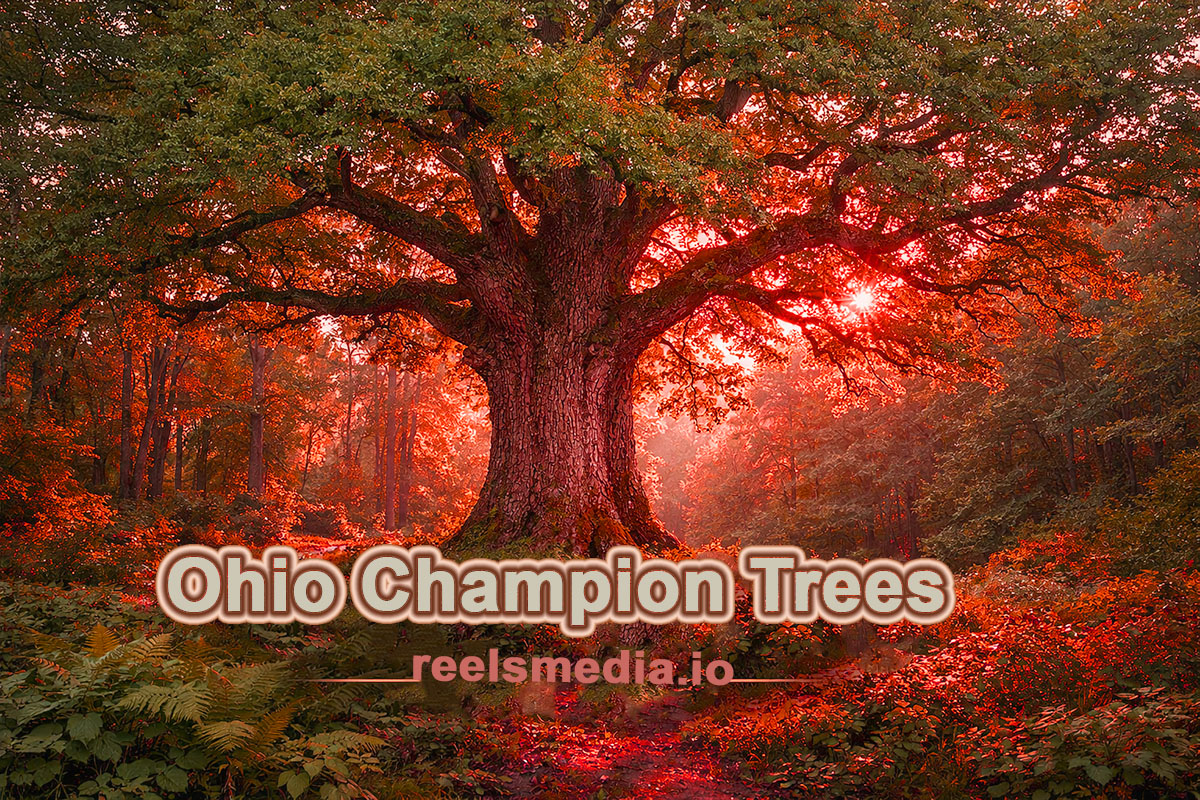
Ohio Champion Trees celebrate the tallest, widest, and most remarkable trees across Ohio. The official Champion Tree Program records each species based on height, circumference, and crown spread. Experts measure and verify every nomination to maintain accurate records and protect valuable forest heritage. These natural giants represent strong ecosystems, rich biodiversity, and long-standing conservation efforts in the state.
Introduction to Ohio Champion Trees
When I first began exploring Ohio champion trees, I realized they are more than tall trunks and wide branches. In places like Lewis Center, Delaware County, and near Columbus, these giants stand on rich glacial soils. Each tree feels like a living museum, rooted in environmental pride, historical identity, natural beauty, and deep community connection.
Visitors walk through protected parks, admire ancient trees, and see how urban development and conservation now share the same ground. These living monuments rise quietly in a fast-growing suburb, yet they protect fragile ecosystems and preserve local biodiversity. I often guide friends through these green spaces, and every time, they look up in silence as if meeting history itself.
What Makes a Tree a Champion
Experts define Ohio champion trees as the largest known examples of a species based on exceptional size, age, and sometimes species rarity. The system, guided the Ohio Department of Natural Resources (ODNR), measures trunk circumference at 4.5 feet, total height, and crown spread using a detailed point system. Foresters award one point per inch, one point per foot, and a quarter-point per foot to calculate the final score.
The process follows a strict scientific process with a standardized system, verified by certified measurers and recorded in an official registry. Trees compete for titles as state champions or national champions, and sometimes they rank as national co-champion contenders. I once watched a team measure a cottonwood, and I saw how seriously they handled every inch of growth and every detail of growth scale and canopy width.
Strong genetics, balanced sunlight exposure, and steady water availability help these trees reach full maturity and display. Each champion reflects years of environmental change, careful verification, and deep respect for forestry standards.
The Ohio Champion Trees Program
The Ohio Big Tree Program, launched in 1940, continues to identify and celebrate champions across the state. The ODNR manages this volunteer-driven initiative, welcomes public nominations, and ensures every candidate passes a careful verification process. This effort keeps the state registry updated and highlights trees that shape Ohio’s natural story.
Several national champions have gained attention through this program, including the American Sycamore in Ashland County, the Cucumber Magnolia in Stark County, and a towering Eastern Cottonwood in Alum Creek State Park. Events like the Big Tree Hunt encourage residents in Delaware County and beyond to search for future record holders. I appreciate how the program turns curiosity into real conservation awareness.
By linking communities with forestry experts and the Division of Forestry, the program strengthens conservation awareness while protecting living history. Every nomination reminds people that protecting Ohio champion trees requires teamwork and long-term care.
Measurement and Recognition System
The scoring method looks simple, yet it demands precision. Teams measure trunk circumference at 4.5 feet above ground, record tree height with a laser or clinometer, and calculate crown spread through average width calculation. In some cases, experts confirm height with LIDAR confirmed readings to ensure accuracy.
Famous examples include trees measuring 236 inches, 370 inches, or even 380 inches in circumference. Heights can reach 96 feet, 122 feet, or 136 feet, while spreads stretch to 93 feet, 102.9 feet, or 135 feet. These giants score 340 points, 355 points, 527 points, 540 points, 561 points, or even 577 points on the national big tree scale using the official scoring formula and detailed documentation.
Such recognition transforms a tree into a verified state champion or potential national record holder. I always remind visitors that behind every impressive number stands decades of growth and careful measurement.
| Location / Program | Ecological Role | Recognition Level |
| Lewis Center | Biodiversity support | State champion |
| Delaware County | Riparian corridors | National contender |
| Columbus suburb | Urban cooling / shade | Registry listed |
| Alum Creek State Park | Stormwater management | National champions |
| Highbanks Metro Park | Soil erosion prevention | ODNR verified |
| Preservation Parks | Groundwater absorption | Certified record |
| Ohio Big Tree Program | Public nominations | Official registry |
| Division of Forestry | Monitoring / arborists | Verified score |
| Ashland County | Historic specimens | 561 points |
| Stark County | Native species habitat | 427 points |
| Big Tree Hunt | Community engagement | Contest entry |
Ecological and Environmental Importance
Large champions act as engines of carbon storage, absorb carbon dioxide, and support climate change mitigation. Their wide canopies provide shade and natural urban cooling, while deep root systems prevent soil erosion prevention and improve groundwater absorption. These giants manage stormwater management and strengthen overall ecological balance.
Wildlife thrives around these trees because they provide essential wildlife habitat for birds, insects, and mammals. Healthy riparian corridors and fertile glacial soils increase their ability to deliver vital ecosystem services like air filtration and air quality improvement. Mature trees outperform smaller ones in storing carbon and protecting nearby neighborhoods.
When I stand beneath one of these trees, I feel how nature works quietly yet powerfully. These living archives record centuries of change and remind us why environmental stewardship matters.
Historical Significance of Ohio Champion Trees
Early agricultural settlement patterns shaped the land around Lewis Center. Early settlers valued these trees for shade, shelter, and as boundary markers or gathering points. Even during deforestation, industrial expansion, and suburban development, some giants survived because communities chose preservation over removal.
These trees witnessed centuries of land clearing and transformation from farmland to thriving neighborhoods. Preserved specimens now stand as living monuments that connect generations and protect shared heritage.
Each trunk holds a story of resilience, community history, and environmental endurance that continues to shape local identity.
Lewis Center as a Champion Tree Location
In Lewis Center, near Alum Creek Lake, Africa Road, and Cheshire Road (County Road 72), visitors can explore areas close to Interstate 71 and admire woodland giants marked by GPS 40.239013N 82.961554W. Parks like Highbanks Metro Park and the Preservation Parks of Delaware County protect remarkable trees in residential neighborhoods, school yards, greenways, and drainage areas.
Nearby regions such as Jeromesville, Ashland County, and the Saybrook area in Ashtabula County host additional champions, including a record tree in Big Oak Nature Park. These landscapes support growth thanks to fertile soil and long preservation efforts.
The balance between development and preservation proves that Ohio champion trees can thrive even inside a modern Columbus suburb.
Read more about A Comprehensive Guide
Notable Species in Ohio
Many species compete for champion status, including White Oak (Quercus alba), Eastern Cottonwood (Populus deltoides), American Sycamore (Platanus occidentalis), Black Walnut (Juglans nigra), and Silver Maple (Acer saccharinum). Others like Sugar Maple, American Beech, and the state symbol Ohio Buckeye (Aesculus glabra) add cultural depth to the story.
In wetlands and hardwood areas, species such as Swamp White Oak (Quercus bicolor) and Cucumber Magnolia display impressive crowns and strong trunks. These native species dominate hardwood forests and flourish in riparian species habitats.
Every tree brings unique value, yet together they form the backbone of Ohio’s living forest identity.
Read more about Uncuymaza
Cultural and Community Impact
Communities build pride around these giants through eco-tourism, photography, and rising property values in areas with strong neighborhood aesthetics. Schools organize school field trips, host educational programs, and promote environmental education that encourages long-term volunteerism.
Local groups launch conservation initiatives, create public awareness campaigns, and arrange guided tree walks. Residents submit citizen nominations to protect local champions and strengthen stewardship.
I often see families gather under these trees for reflection, and I notice how such moments improve mental well-being while connecting people to their environment.
Visiting and Experiencing the Trees
Visitors can walk through Alum Creek State Park trails or explore the Highbanks Metro Park Overlook Trail using tools like AllTrails or iNaturalist. Many carry a field guide Trees of Ohio, binoculars, or even a tape measure to learn the basics of scoring.
Photographers rely on a wide-angle lens, sometimes using a Sony Alpha 850 with a 16-35mm zoom lens, a stable tripod, and a polarizing filter. Some enhance detail with Photomatix HDR software and capture bracketed exposures for balanced light.
Families enjoy ADA-accessible options, attend family-friendly events, and follow Leave No Trace principles to protect every champion they visit.
Read more about Malia Manocherian
Future Outlook Of Ohio Champion Tree
Modern urban sprawl, climate change, and land development threaten many champions. Invasive pests like the emerald ash borer, combined with severe weather events, disease, and natural aging, increase risk for aging trees.
Experts depend on careful monitoring and smart conservation planning to protect these giants. Strong community engagement and wise resource allocation support sustainable development.
If communities continue to value Ohio champion trees, these natural landmarks will stand tall for future generations.
Conclusion of Ohio Champion Trees
Names like Jeromesville American Sycamore, champions from Nature Park, and Alistair Reynolds under the Division of Forestry remind us that records change when a former champ fallen opens space for a new Ohio State Champion.
The journey of Ohio champion trees blends science, history, and community pride. These giants show strength, longevity, and coexistence between growth and preservation.
When I walk beneath their towering canopies, I see more than measurements and points. I see living proof that careful stewardship keeps Ohio’s natural story alive.
FAQs
What are Ohio champion trees?
Ohio champion trees are the largest recorded trees in the state, ranked by height, trunk circumference, and crown spread.
How are Ohio champion trees measured?
Experts measure height, circumference at breast height, and average crown spread to calculate a total point score.
Who manages the Ohio champion trees program?
The state forestry department and natural resource experts manage nominations, verification, and official records.
Why are Ohio champion trees important?
They protect forest heritage, support biodiversity, and highlight conservation efforts across the state.
Can anyone nominate Ohio champion trees?
Yes, citizens can submit a nomination if they believe a tree qualifies based on official measurement standards.