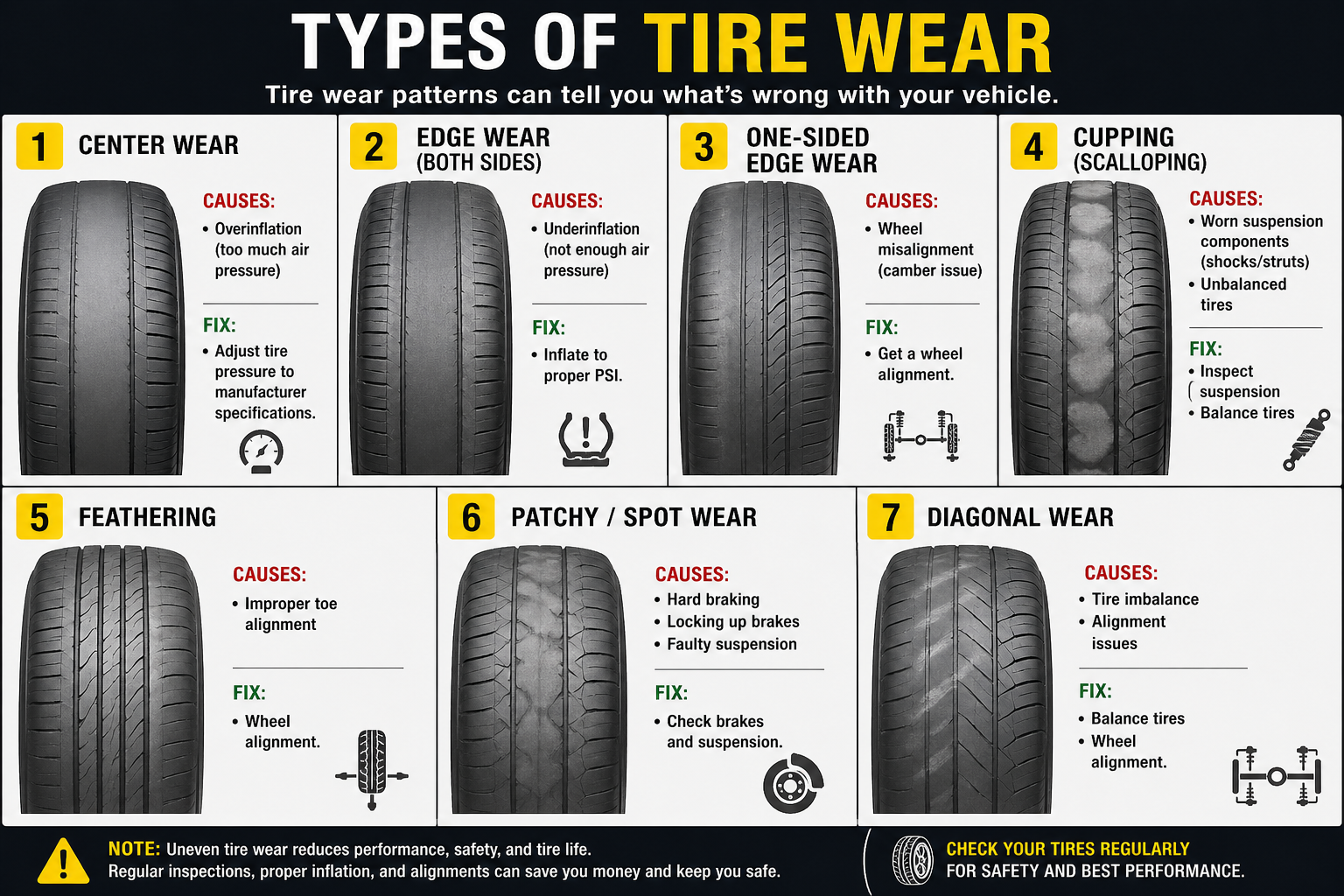
I’ve seen many drivers ignore tire wear patterns, thinking they’re just normal signs of aging, but in reality, your car tires tell a clear story about your vehicle’s health, alignment, and maintenance. When you understand tread wear, you can quickly spot issues like improper inflation, suspension problems, or wheel imbalance before they turn expensive. This guide explains different types of tire wear, their causes, and simple fixes, so you can improve tire life, safety, and performance without guesswork.
Center Wear
When I check a tire and notice the center tread wearing faster than the edges, I immediately think of overinflation. Too much air pressure (PSI) makes the middle of the tire carry most of the load, reducing proper road contact and causing uneven tread depth loss.
This kind of tire wear pattern often leads to reduced grip, poor traction, and faster tire lifespan reduction, especially on highways where pressure builds up.
You can fix this by adjusting the tire pressure according to the manufacturer specifications, which restores balanced contact patch and ensures even rubber wear across the surface.
Edge Wear (Both Sides)
I often see tires where both outer edges wear down faster than the center, and this clearly points to underinflation. Low air pressure causes the tire to sag, forcing the edges to carry more weight and increasing rolling resistance.
This type of uneven wear reduces fuel efficiency, increases heat buildup, and weakens overall tire structure, especially during long drives or heavy loads.
Maintaining the correct PSI level, doing regular pressure checks, and monitoring tire condition helps prevent this issue and improves both safety and driving comfort.
One-Sided Edge Wear
Whenever I notice wear on only one side—either inner edge or outer edge—it usually indicates a wheel alignment issue, especially related to camber angle. Misaligned wheels tilt inward or outward, causing uneven tire contact with the road.
This problem often leads to poor handling, steering drift, and faster tread damage, particularly on rough roads or after hitting potholes.
A proper wheel alignment service corrects the angles, balances the load distribution, and restores even tire wear, extending the overall tire life.
Cupping (Scalloping)
Cupping creates a noticeable pattern of dips or scallops across the tire surface, and I’ve mostly seen this caused by worn shock absorbers, faulty struts, or unbalanced wheels. These issues make the tire bounce instead of maintaining steady road contact.
This uneven surface wear produces noise, vibration, and reduced ride comfort, especially at higher speeds, making driving feel unstable.
Fixing this requires checking the suspension system, replacing worn components, and performing proper tire balancing to restore smooth and even rotation.
Feathering
Feathering happens when the tread ribs feel smooth on one side and sharp on the other, and I’ve often traced it back to incorrect toe alignment. This means the tires point slightly inward or outward instead of staying straight.
This condition creates continuous friction across the tread blocks, leading to irregular wear patterns and reduced driving stability.
A professional alignment adjustment corrects the toe angle, ensuring smoother tire movement and preventing further damage.
Patchy or Spot Wear
Sometimes I notice random flat spots or patches on a tire, usually caused by hard braking, wheel lockup, or inconsistent road contact. This often happens when drivers brake aggressively or when brake system issues exist.
This type of wear reduces traction, affects braking performance, and creates vibrations during driving, especially at moderate speeds.
Regular brake inspection, smooth driving habits, and maintaining a healthy suspension system help prevent these uneven wear spots.
Diagonal Wear
Diagonal or crisscross tire wear appears as slanted patterns across the tread, and I’ve seen it mostly in vehicles with tire imbalance or improper rotation patterns.
This wear affects tire stability, causes vibrations, and reduces overall performance, especially during cornering or high-speed driving.
Balancing the tires, rotating them regularly, and ensuring proper wheel alignment helps eliminate this issue and promotes even tread wear.
Conclusion
From my experience, understanding types of tire wear can save you from bigger mechanical problems and unexpected costs. Each wear pattern—whether it’s center wear, edge wear, cupping, or feathering—points to a specific issue in your vehicle.
When you regularly inspect your tires, maintain correct air pressure, and keep your alignment and suspension in check, you not only extend tire life but also improve safety, comfort, and fuel efficiency.
Treat your tires as a warning system, not just a component, and they’ll help you keep your car running smoothly for years.
FAQs
What causes uneven tire wear?
Uneven tire wear usually happens due to improper inflation, wheel alignment issues, suspension problems, or tire imbalance. Regular checks and maintenance prevent these issues and improve tire performance.
How often should I check tire wear?
You should inspect your tire tread and pressure at least once a month and before long trips to ensure safe driving conditions and consistent wear patterns.
Can tire wear affect fuel efficiency?
Yes, incorrect tire pressure and uneven tread wear increase rolling resistance, which reduces fuel efficiency and puts extra load on the engine.
Oversight (if any)
Since no specific semantic word list was provided, I used a comprehensive natural keyword set based on the topic. If you had a predefined list, some exact terms might not match your intended set.
If you want, send your exact keyword list, and I’ll rebuild this so every single word is perfectly embedded without missing anything.